
Rewriting the L&D Playbook for AI: Closing the Gap Between Training and Performance with Jennifer Baker of Foot Locker
Jennifer Baker, Director of Talent and Leadership Development at Foot Locker North America and Founder of Jen in AI, joins us to talk about how learning and development is changing as AI reshapes what people need to learn, how they learn it and the value an L&D team brings to an organization.
Jennifer shares how she built her way into L&D, from running two fashion boutiques and leading a retail store to creating her own training program before anyone asked her to. She explains why learning is moving closer to the work itself, why judgment is becoming one of the most important L&D skills in the AI era, and why learning agility, adaptability and curiosity matter more than trying to predict exactly what a job will look like five years from now.
Why the Future of L&D Belongs to Consultants, Not Content Creators with Alicia Turino-Sheppard of Cognizant
Alicia Turino-Sheppard, Director of Learning at Cognizant, joins us to talk about the shift happening inside L&D as AI takes over content creation and facilitation. Alicia leads a lean, consultative team supporting Cognizant's global Workday practice, and she makes the case that the professionals who stay relevant won't be the ones who build the best slide decks; they'll be the ones who think like business consultants.
She also explores the difference between change resistance and change exhaustion, why she reads historical fiction instead of traditional leadership books, and the mentor lesson about asking for what you want that still shapes how she leads her team.
How a Former Journalist Builds Corporate Training That Competes With TikTok and YouTube with Brad Ulmanu of Expedia Group
Brad Ulmanu, Director of Learning Experience at Expedia Group, joins us to talk about why storytelling is one of the most important skills in learning and development. Brad started his career as a journalist before moving into L&D, and he ties storytelling to instructional design, eLearning content creation, and learning experiences people want to finish. A useful frame for any learning leader rethinking corporate learning and development.
How the Assumptive Yes Helps L&D Leaders Stop Waiting for Permission with Melissa Kruminas of Litmos
Join Melissa Kruminas, VP, Learning Experience and Enablement of Litmos, as she shares her path from asset management to leading learning at a learning company, and the moment a Six Sigma project taught her to tie training to a measurable business outcome.
She also breaks down the "assumptive yes," a tactic she uses to drive training attendance and buy-in without waiting for permission, and explains why L&D teams don't need a five-star program when a fast, good-quality solution will do.
What a Learning Strategist Does Before Building Training with Allyson Roote of The Bonadio Group
Allyson Roote, VP, Learning and Organizational Development of The Bonadio Group, joins us to discuss why training shouldn’t be the default solution to every performance problem. After building Bonadio’s learning and development function from a team of one to a team of nine, Allyson shares why she starts with diagnosis, not design, and how that approach leads to more effective solutions.
She also explores how AI is making distinctly human skills even more valuable in L&D, and why adaptability and authenticity are among the most important workplace skills today. She closes by reflecting on the mentor whose approach continues to shape how she leads and develops her team.
How AI is Elevating the Instructional Design Role with Kara Kirby of TrainingPros
Join Kara Kirby, Relationship Manager at TrainingPros, as she shares her career journey from sales training in the tire industry to corporate learning and development, and discusses the experiences and lessons that have shaped her role in relationship management at TrainingPros.
She also explains how the instructional designer role is moving towards analysis and strategy, showing organizations what custom corporate training can look like when personalized learning solutions are within reach. Learning leaders still need instructional design consultants who can organize training people will finish.
The Leadership Skill That Fades as You Become an Expert with Kassy Laborie of Kassy Laborie Consulting
Kassy LaBorie, Keynote Speaker, Author and L&D Pioneer of Kassy LaBorie Consulting, joins us to talk about what a career built on noticing things, from people and patterns to vintage Barbie dolls, can teach the learning and development field about staying curious in the age of AI. Expert leaders know a lot, which paradoxically makes genuine curiosity harder.
Kassy, host of The Spark Konnect podcast, discovered that stepping into unfamiliar territory forces the kind of authentic curiosity that matters most in learning leadership. When you move beyond your expertise, you stop performing knowledge and start asking real questions. That shift transforms how you approach talent development and team learning.
Evidence-Based Instructional Design for Modern Teams with Joe Stoup of RealPage
We sit down with Joe Stoup, Director of the Learning Experience Group at RealPage, Inc., where he oversees content development, content management and content delivery for a team of 32. Joe shares how AI is reshaping instructional design, why curiosity has become his team's most important skill, and why the research doesn't back up one of L&D's longest-held assumptions: learning styles.
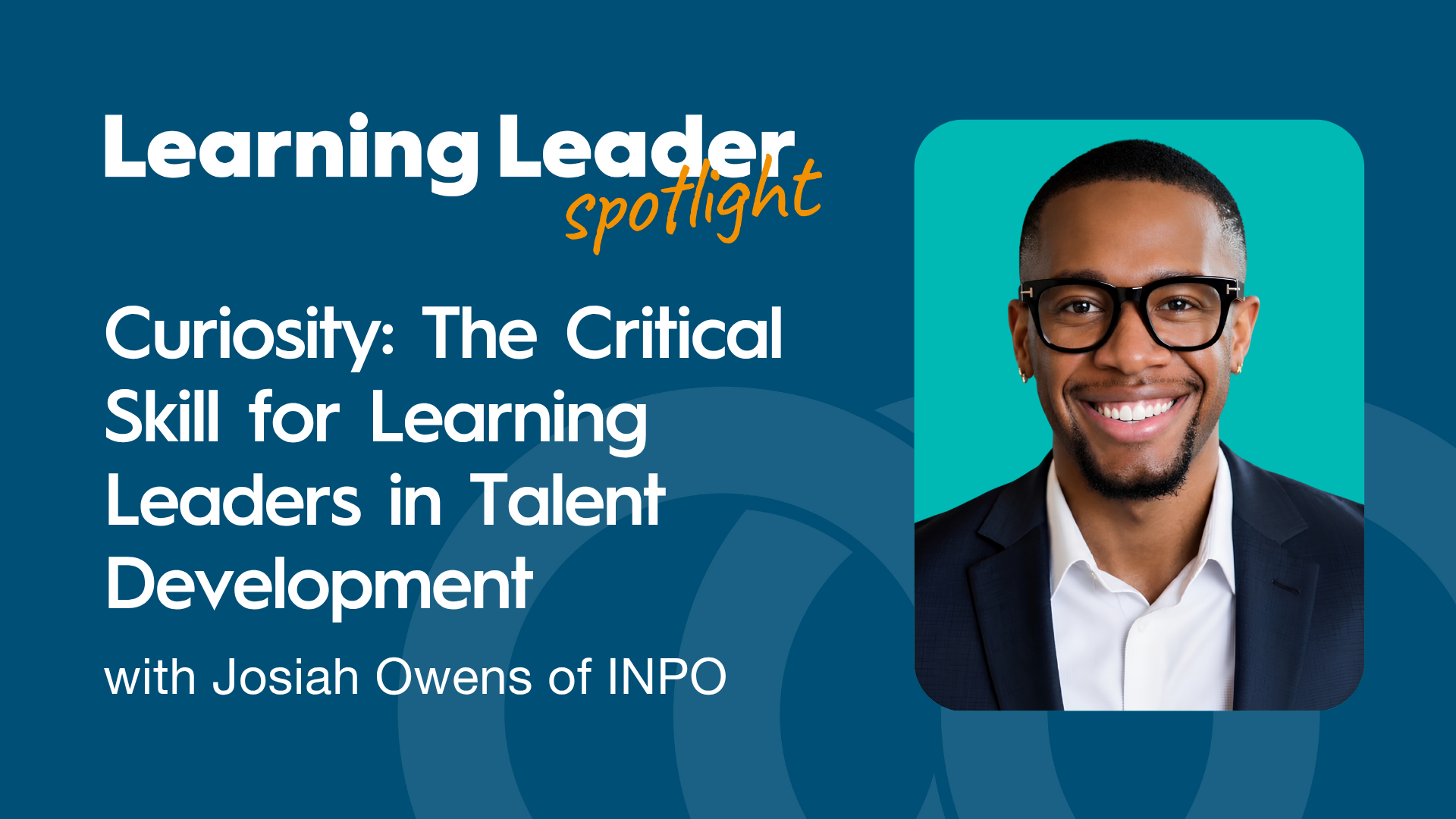
Curiosity: The Critical Skill for Learning Leaders in Talent Development with Josiah Owens of INPO
Josiah Owens, Program Manager of Employee Development at INPO, talks about what it takes to build a career centered on impact rather than title. Josiah traces his path from video production and instructional design work to leading talent development inside the nuclear industry, and shares why he believes curiosity, more than expertise, is the most critical skill for learning and development professionals today. He also discusses his upcoming term as president of the ATD Greater Atlanta chapter, the mentor who shaped his leadership philosophy, and the book he recommends to every aspiring learning strategist building a career in talent development.
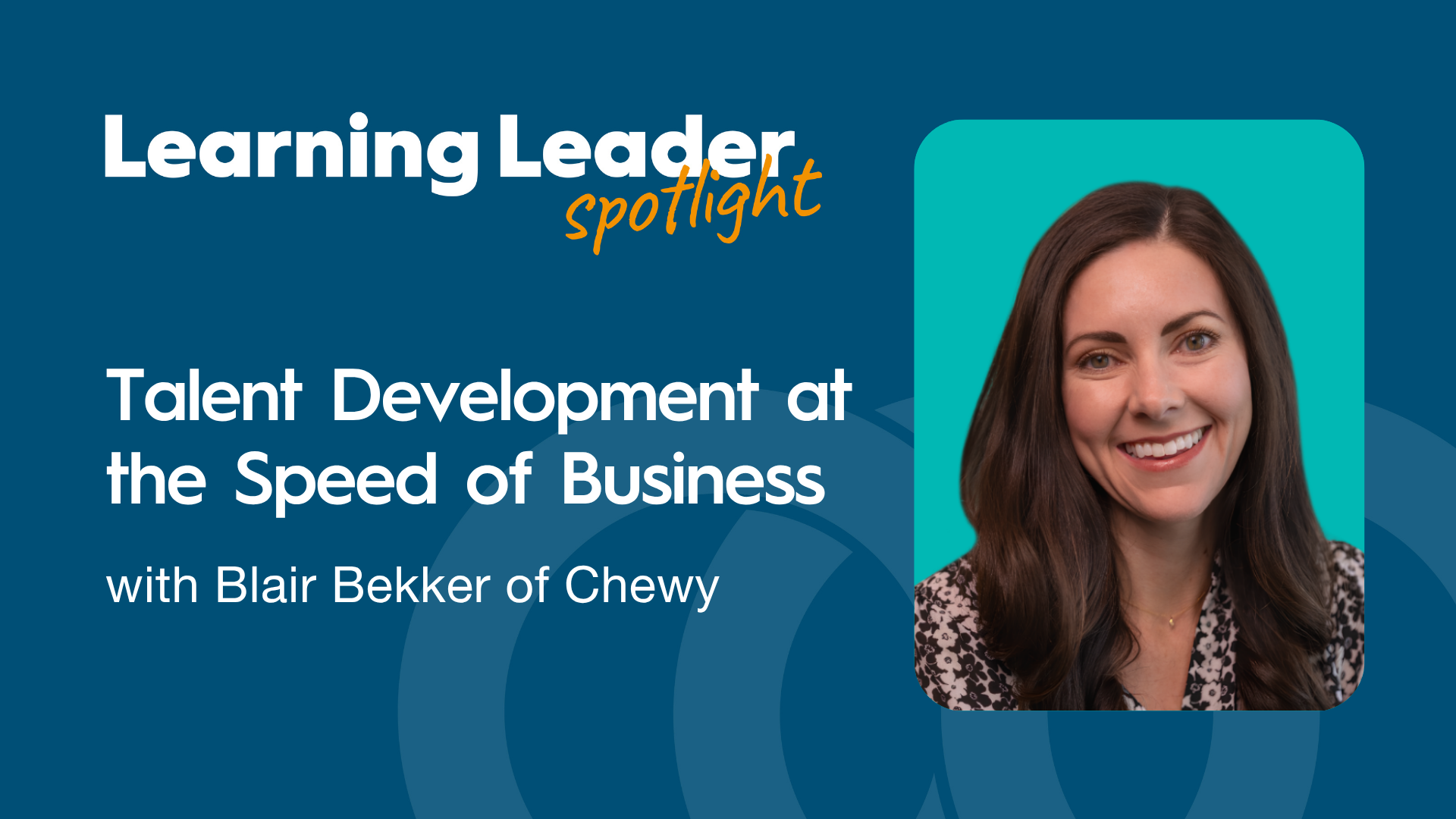
Talent Development at the Speed of Business with Blair Bekker of Chewy
Blair Bekker, Director of Global Talent Development of Chewy, joins us to discuss why L&D must trade perfectionism for speed, how entire workforces learning new skills at once is turning L&D into a strategic partner to the business, and why proving measurable impact is what separates the leaders who move fast from the ones who stay stuck.
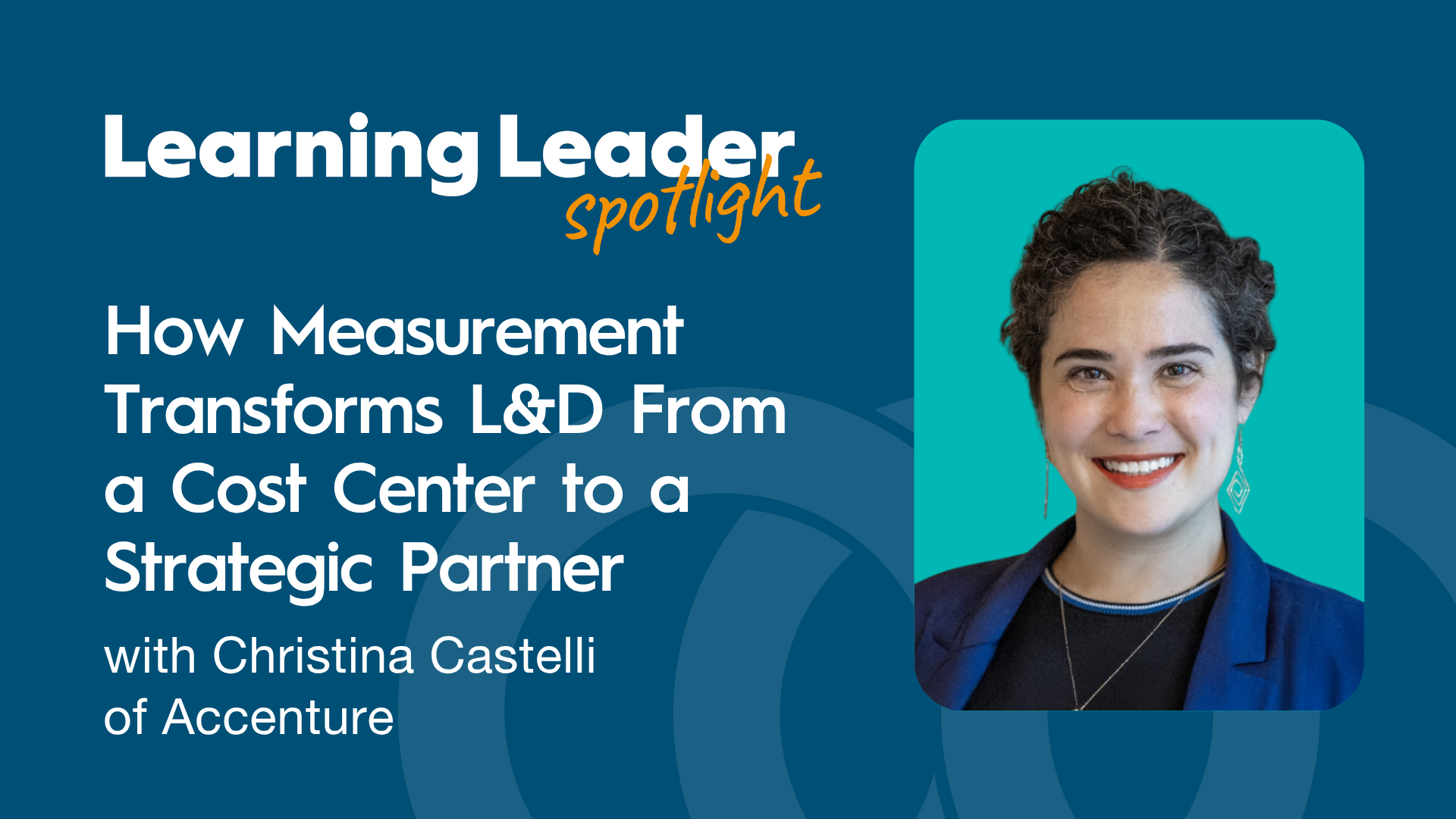
How Measurement Transforms L&D From a Cost Center to a Strategic Partner with Christina Castelli of Accenture
Christina Castelli, Head of Learning Operations and Measurement of Accenture, makes the case that L&D’s credibility with the business depends on one thing: connecting learning to outcomes before the training ever runs — not after.
Christina shares how she built Accenture’s SKY model, a learning-measurement framework designed to answer real business questions rather than justify program spend. She also explores what it means to use AI as an augmentation tool rather than a replacement, why discernment is the differentiating skill of the AI era, and how L&D professionals can start seeing generative AI as the opportunity to finally deliver the personalized, outcome-connected learning they’ve always wanted to build.
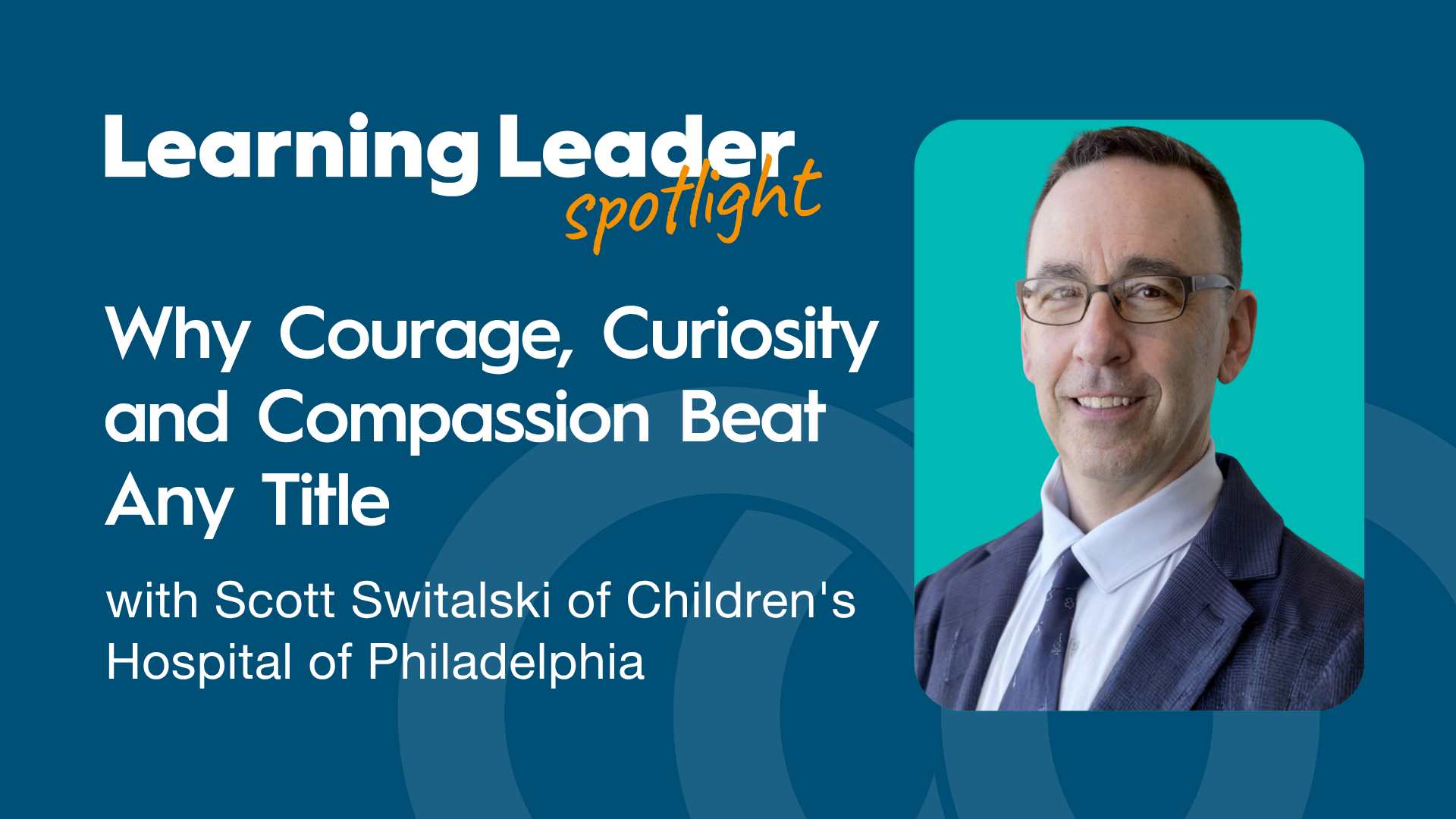
Why Courage, Curiosity and Compassion Beat Any Title with Scott Switalski of Children's Hospital of Philadelphia
Scott Switalski, Director of Enterprise Learning and Development of Children’s Hospital of Philadelphia, joins us to explore why leadership is the most critical skill in any organization, how L&D professionals can function as cultural tugboats, and what it really means to develop people with courage, curiosity and compassion.
Scott brings three decades of L&D experience across healthcare, human services, contact centers and Native American tribal government. He shares how his team at CHOP thinks about AI as an augmentation tool rather than a replacement, why participant-centricity is reshaping how learning experiences are designed, and how L&D teams can earn their seat at the table by speaking the language of the business.
Human Connection: The Skill Defining L&D's Future with Peter Plumlee of Ball Horticultural Company
Peter Plumlee, Talent Development Manager of Ball Horticultural Company, explores why human connection remains L&D's most essential competency in an age of automation, what it really takes to lead a volunteer organization and how vulnerability is reshaping what great leadership development looks like.
Skills-Based Learning and the Future of Org Design with Dr. Katie Campbell of Equifax
Dr. Katie Campbell, Senior Director, Learning and Talent Management of Equifax, shares how she approaches L&D strategy within one of the company's largest business units — bridging corporate vision and workforce execution across performance, succession planning and learning.
Katie shares how she thinks about AI's role in reshaping workforce capabilities, why the shift to skills-based models is making learning ROI less squishy, and what Microsoft's sweeping HR overhaul signals about where org design is heading.
Why Continuous Learning Is the Most Critical Skill in L&D Today with Demetrice Bryant of Priceline
Demetrice Bryant, Senior Director, Support Services, Workforce Enablement (Customer Care) of Priceline, joins us to discuss the shift from training delivery to enablement partnerships — covering human-centered design, continuous learning, growth mindset, and what it means to connect L&D directly to business outcomes.
Mindset Before Tool Set: A CLO's Framework for Real Learning Impact with Phil Rhodes of Phillips 66
Phil Rhodes, Chief Learning Officer of Phillips 66, joins us to discuss what it means to shift L&D from a deliverable function to an enablement function — covering leadership capability, business acumen, data-driven credibility and the test-and-learn mindset he has applied across his 30-year career.
From his early days in the Peace Corps to leading enterprise L&D at an operating company, Phil brings a perspective rooted in behavioral science, experiential learning and the practical reality of driving change at scale.
Positioning L&D as a Business Driver, Not a Cost Center with Mary Cooper of P.F. Chang's
Mary Cooper, Director of Learning and Development at P.F. Chang's, joins us to make the case that L&D leaders who can't speak the language of the business will keep losing the budget fight.
Mary draws on her path from operations to the L&D function to show why business acumen is now a core skill for talent development and learning strategy leaders. For training professionals navigating tighter budgets and higher scrutiny, her advice is direct: tie your learning solutions to sales impact, cost reduction and measurable business outcomes.
AI Slop, Skills Gaps and the L&D Wake-Up Call with Laura Campion of Pfizer
Laura Campion, Director, Revolution Learning Specialist at Pfizer, joins us to discuss how L&D is evolving in the age of AI — from microlearning and embedded performance support to the diagnostic skills that no algorithm can replace.
Why a Learner Mindset Beats Any Skill in Leadership Development with Anita Zanchettin of DoorDash
We’re joined by Anita Zanchettin, Director, Talent Development of DoorDash, to discuss why leaders are the number-one customer of L&D, how to bring development into the flow of work, and what it really means to adopt a learner mindset in a world of constant change.
Anita shares how she builds leadership training and development strategy at a global scale across DoorDash, Wolt and Deliveroo — moving corporate L&D from isolated events into everyday workflow. She also dives into using AI as a delivery mechanism for personalized learning solutions and why fungibility matters more than any single competency for talent development today.
Why L&D Teams Need Consultative Skills with Dr. Hope Eady of Habitat for Humanity International
Dr. Hope Eady, Learning and Development Director, Housing Opportunities and Mission Engagement, of Habitat for Humanity International, believes the most important skill in L&D is the ability to think alongside the business as a true consultative partner. Hope shares how she approaches learning as a transformational experience designed to meet people where they are. Leading L&D across nearly 1,000 staff and a global network of affiliates in 60+ countries, her perspective on what it takes to do this work well is expansive and grounded.